The best free MOBAs on PC in 2026 are not interchangeable clones. They differ in camera perspective, average match length, champion or god access, ranked gates, launcher friction, and what money can actually buy. This guide compares the three active PC picks that still meet a strict free-entry standard in the checked US region: League of Legends, Dota 2, and Smite.
Direct answer
For strong onboarding tools and a broad matchmaking ecosystem, start with League of Legends. For the deepest draft and mechanical ceiling with the full hero roster open from account creation, choose Dota 2 on Steam. For third-person, skill-shot MOBA play, this guide recommends Smite over SMITE 2 here because original Smite’s Conquest, Joust, and Arena paths, Steam access, and god-unlock record were verified on July 23, 2026 with lower successor-transition uncertainty, even though SMITE 2 also runs as a separate free-to-play Open Beta.
Every game below was free to install and enter in the checked US region on July 23, 2026, uses an official active PC destination, and supports standard 5v5 lane-based MOBA play in its primary modes. Heroes of the Storm, Pokémon Unite, Predecessor, and other excluded titles are discussed only in the methodology section.
What counts as a MOBA here
DealCheckpoint treats a MOBA as a team-based online battle arena where two sides fight across lanes and jungle space toward a core objective, picking unique characters with distinct ability kits before the match begins.
That excludes hero shooters whose main loop is round-based gunplay, auto-battlers that remove direct moment-to-moment control, and arena brawlers without lane structure. It also excludes demos, retired clients, and products that require buying a base game before queueing in core modes.
Some games blend MOBA rules with other genres. Smite qualifies because its Conquest-style modes keep lane, jungle, and objective structure even though the camera sits behind the character. Pokémon Unite was excluded from this PC-first list because its platform scope and match structure diverge enough that it belongs in a separate guide rather than here.
Selection method
A game qualified only when its exact base product was free to enter in the checked US region, the listing was not a demo or temporary promotion, and current official material documented PC support, account requirements, hero or god access, ranked eligibility, launcher path, and monetisation boundaries.
We did not rank by streamer hype or outdated player-count posts alone. We compared camera perspective, typical match length, tutorial quality, roster unlock models, ranked gates, anti-cheat policies, and the clearest reason a new account might hit a paywall after the tutorial.
Inclusion required an active official PC client on July 23, 2026. League of Legends verified through Riot’s current product and support pages. Dota 2 verified through Valve’s Steam listing and Dota 2 support documentation. Smite verified through Hi-Rez’s current Steam listing and smitegame.com, confirming the original third-person MOBA remains installable alongside the separate SMITE 2 product.
Exclusion examples: Heroes of the Storm because Blizzard ended active development and its PC access model no longer fits a 2026 recommendation list. Pokémon Unite because this article targets PC MOBA installs rather than cross-platform spin-offs with shorter match rules. Predecessor because its access model and live-service status could not be verified to the same standard on the check date. SMITE 2 is a separate free-to-play Open Beta successor with its own roster tokens, progression tracks, and monetisation record, actively promoted on Hi-Rez’s current official SMITE site. Original Smite remains this guide’s third-person pick because its mature mode list and Steam listing were verified without requiring a beta transition, even though SMITE 2 is also free to enter.
Comparison table
| Game | Camera | Typical match length | Team size | Hero access | Launcher | Anti-cheat | Free-entry boundary | Checked |
|---|---|---|---|---|---|---|---|---|
| League of Legends | Top-down isometric | 25 to 40 minutes | 5v5 | Weekly free rotation plus BE or RP unlocks | Riot Client | Riot anti-cheat per current PC policy | Base client and core modes free to enter | Jul 23, 2026 |
| Dota 2 | Top-down isometric | 35 to 50 minutes | 5v5 | Full hero roster without individual unlock purchases | Steam | VAC | Base client all heroes and core modes free to enter | Jul 23, 2026 |
| Smite | Third-person over-the-shoulder | 20 to 35 minutes | 5v5 | Starter roster Favor grind Gems and weekly rotation | Steam or Hi-Rez launcher | Easy Anti-Cheat on current PC listings | Base client free with god unlock paths | Jul 23, 2026 |
League of Legends

League of Legends is Riot’s flagship 5v5 MOBA: three lanes, jungle camps, dragon and baron objectives, and a large champion roster divided into distinct roles. Matches usually land in the 25-to-40-minute range depending on patch pace and team coordination.
Best for players who want a large, established matchmaking ecosystem, frequent balance updates, strong tutorial and practice-tool support, and a clearer role structure than Dota’s broader item and mechanic stack. Skip if you refuse to install the Riot Client beside Steam, dislike last-hitting and lane pressure, or want every champion permanently unlocked without grinding Blue Essence or spending Riot Points.
Hero access model: new accounts do not receive the entire champion roster automatically. Riot rotates a free champion pool weekly, and permanent unlocks come through Blue Essence earned in-game or Riot Points purchased with real money. Event passes, skin lines, and cosmetic bundles sit on top. Do not describe League as a game where every champion is unlocked by default.
Ranked readiness: ranked Summoner’s Rift requires a ranked-eligible account under Riot’s current rules, including champion ownership thresholds and account progression gates that change with seasonal onboarding updates. Treat SMS verification, ranked restrictions on new accounts, and required champion count as live-policy checks before you promise a day-one ranked queue.
Practice support: co-op vs AI, the Practice Tool, and rotating game modes give new players a lower-stress path before normal draft queues. That helps onboarding, but it does not remove role knowledge, map awareness, or ranked pressure later.
Monetisation boundaries: skins, chromas, battle pass-style event tracks, and Riot Points bundles are the visible store layer. Champion access itself is the main gameplay-adjacent purchase path and must be disclosed separately from cosmetics. Read Are Free-to-Play Games Pay-to-Win? before assuming spending only changes appearance.
Launcher and account: League installs only through the Riot Client on PC, not Steam. Online play is required for standard matchmaking. Official League of Legends site. Source checked July 23, 2026.
Dota 2
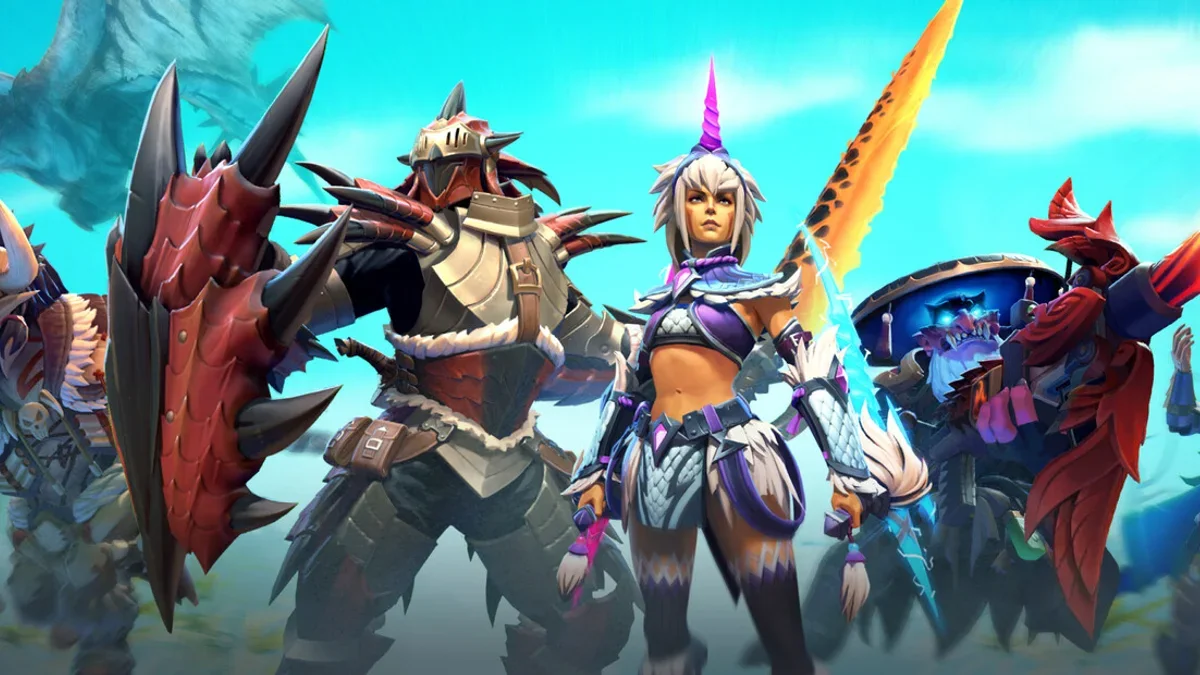
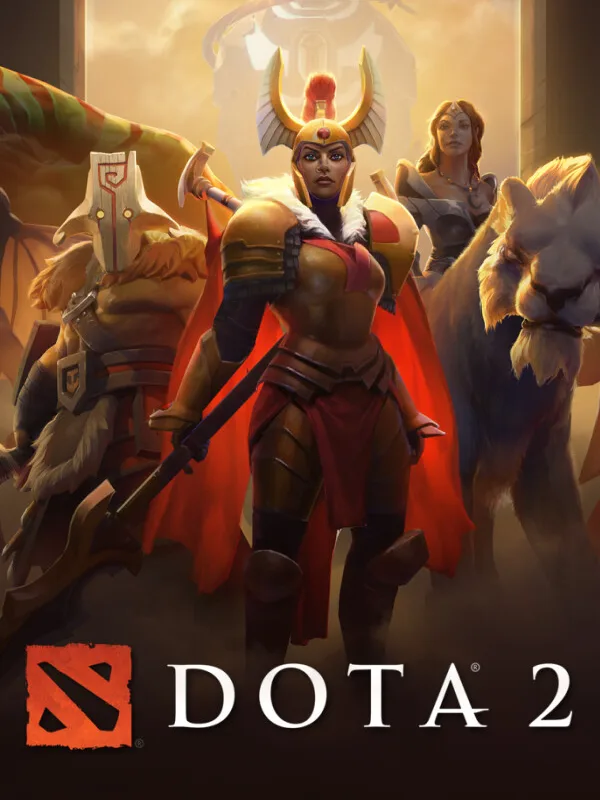
Dota 2 is Valve’s lane-based 5v5 MOBA on Steam, widely regarded as the genre’s deepest mix of hero abilities, item actives, map mechanics, and draft strategy. Average matches often run longer than League, commonly landing between 35 and 50 minutes when teams scale into late-game item spikes.
Best for players who want the full hero roster available without individual unlock purchases and who enjoy learning through replay analysis, tooltips, and mechanical mastery. Skip if you need a short onboarding path, minimal mechanic density, or a client outside Steam.
Hero access model: Dota 2 does not sell permanent hero unlocks in the standard store model. Every hero is selectable for standard matchmaking without buying the character first. That is materially different from League and Smite and should not be shortened into vague “everything is free” marketing language. Optional Dota Plus adds analytics, progression tracks, and convenience features rather than core hero access.
Monetisation boundaries: the Dota 2 store focuses on cosmetic sets, treasures, battle pass products, and the optional Dota Plus subscription. Community Market trading adds economic complexity around cosmetic items. Dota Plus can provide preparation information some players view as more than presentation, which is why shorthand labels that treat the whole game as presentation-only fail here.
Ranked readiness: ranked matchmaking requires meeting Valve’s current account readiness rules, including a substantial unranked playtime gate before calibrating. New accounts should expect many hours of normal games before ranked unlocks, plus continued learning after calibration begins.
Practice support: bot matches, demo hero mode, and player-created lobbies help, but the tutorial is thinner than League’s guided onboarding and the mechanical ceiling arrives quickly once last-hitting, stacking, and vision systems matter.
Launcher and account: Dota 2 runs through Steam with VAC-secured multiplayer. Online play is required for standard matchmaking. Official Steam listing. Source checked July 23, 2026.
Third-person MOBA option
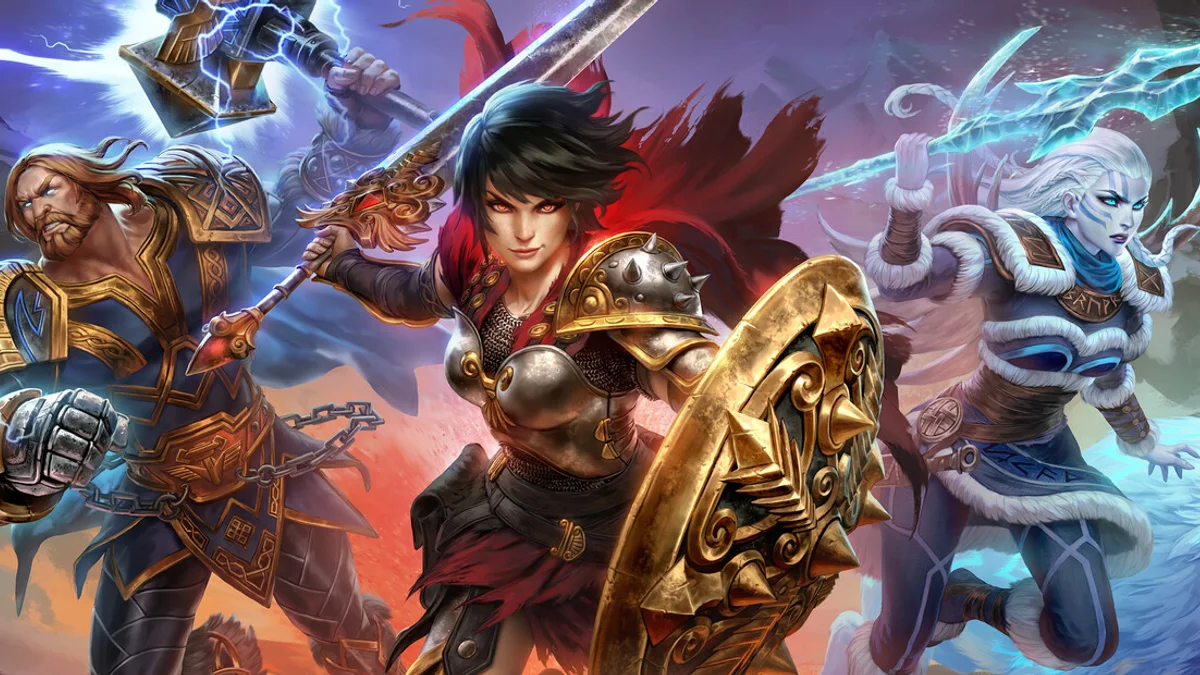
The third-person lane on this list is Smite (original Hi-Rez MOBA). SMITE 2 is a separate free-to-play Open Beta successor with its own god-token progression, ranked paths, and store rules. Hi-Rez’s current official SMITE homepage promotes SMITE 2 alongside the original client, so keep the two products separate when comparing roster unlocks, monetisation, and ranked availability.
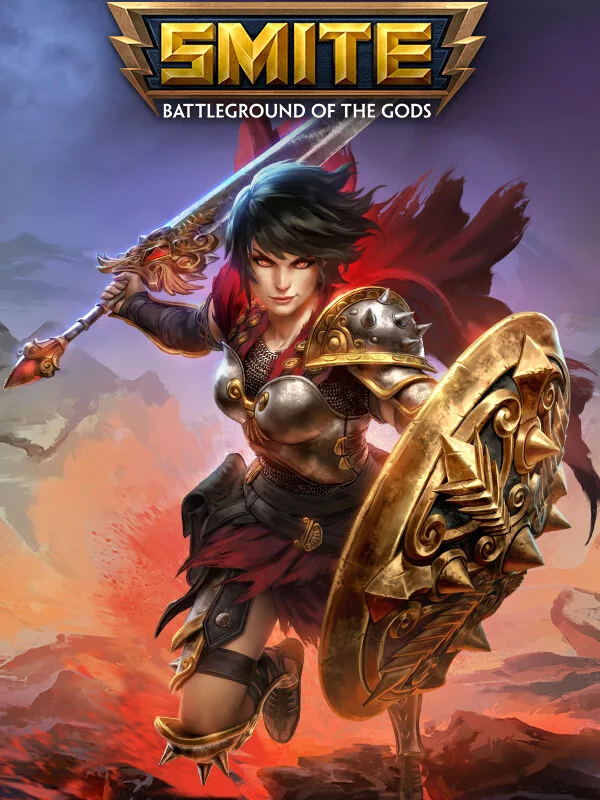
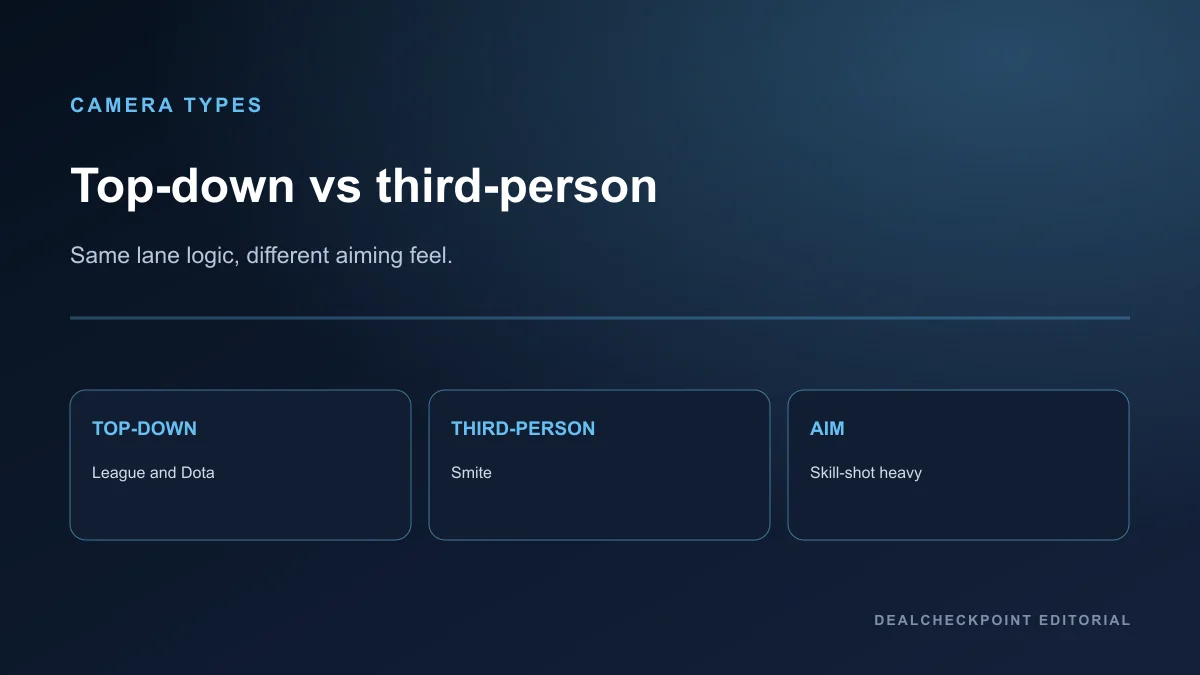
Original Smite remains listed on Steam and smitegame.com as the long-running mythological third-person MOBA with over-the-shoulder camera control, skill-shot ability aiming, and standard 5v5 Conquest-style structure.
This guide recommends original Smite first when you want verified Conquest, Joust, and Arena availability on Steam without betting on a successor transition. If you prefer Hi-Rez’s newer engine path instead, evaluate SMITE 2 on its own official pages — progression and god ownership stay separate between the two clients.
Best for players who prefer action-game camera control, direct skill-shot aiming, and mythological kits over top-down lane clicking. Skip if you want a major esports spectacle scene, the simplest unlock model, or only top-down MOBA habits.
God access model: Smite is not monetised through skins alone. New accounts receive a starter god pool, additional gods unlock with Favor earned through play or Gems bought with real money, and a weekly rotation opens more gods temporarily. The Ultimate God Pack remains a one-time purchase that unlocks all current and future gods on that account. That is a real roster purchase path, not a shop limited to skins and emotes.
Typical sessions: many Conquest matches finish faster than Dota averages, often in the 20-to-35-minute band, though ranked or poorly coordinated lobbies can run longer.
Launcher and account: Smite is available on Steam and through Hi-Rez’s own launcher path depending on install choice. PC listings document Easy Anti-Cheat. Online play is required for standard matchmaking. Official Smite site. Source checked July 23, 2026.
Best for beginners
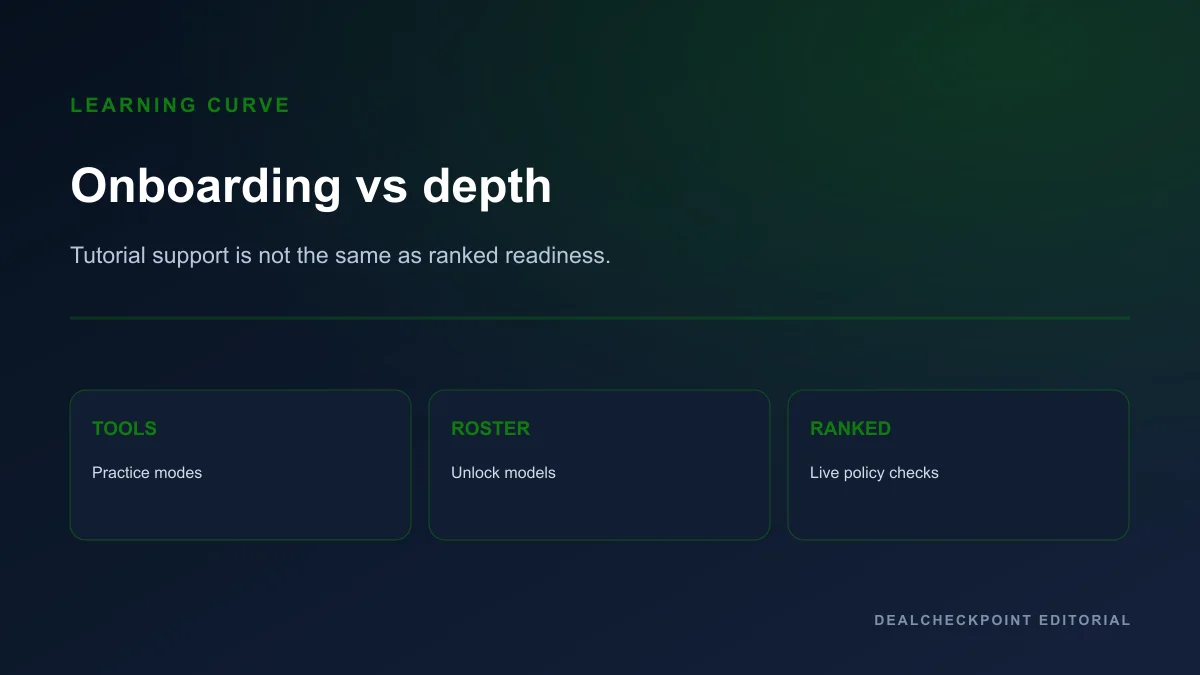
Beginner-friendly depends on what you need forgiven. League usually offers the clearest first-week path if you mean structured tutorials, co-op vs AI, a practice tool, and readable role labels. That does not make League easy in ranked, and it does not remove champion-grind friction once you leave the free rotation.
Smite can feel intuitive to shooter players because movement and ability aiming happen in third person, but last-hitting, relic timing, and Conquest objective calls still punish passive laners. The weekly god rotation also means your comfort pick may disappear when the rotation resets.
Dota 2 is the hardest beginner recommendation on this list despite opening the full hero roster immediately. Last-hitting, turn rates, item active usage, vision rules, and buyback timing create a steep wall before matches feel intelligible. Choose Dota first only if you already enjoy dense systems and accept losing while learning.
Fit: players willing to spend several sessions in bots, co-op, or unranked queues before judging the genre. Not fit: players expecting a 20-minute story mode or zero social pressure.
Best for mechanical depth
If your goal is maximum mechanical and strategic ceiling, Dota 2 remains the genre benchmark on PC. Hero complexity, item combinations, map pressure tools, and draft layers keep expanding years after account creation.
League of Legends still offers high mechanical expression through champion mastery, wave control, and teamfight execution, but its design is more curated than Dota’s sandbox. That trade-off helps readability while capping some systemic chaos.
Smite rewards aiming, movement tech, and third-person spacing more than top-down cursor precision. Its depth is real, especially in jungle pathing and objective steals, but the smaller competitive spotlight and god-unlock friction make it a specialty pick rather than the default depth answer.
Hero and god unlock systems
League uses a weekly free champion rotation plus permanent unlocks through Blue Essence or Riot Points. You can play ranked-relevant champions without paying real money, but only after you earn or unlock enough of them. Event shards and battle pass tracks can accelerate collection, which blurs the line between convenience and roster access.
Dota 2 opens the standard hero roster without individual unlock purchases. Paid products instead target cosmetics, Dota Plus, treasures, and event content. The distinction matters when comparing MOBAs honestly: Dota removes champion purchase friction, not learning friction.
Smite uses Favor grinds, Gem purchases, starter packs, the Ultimate God Pack, and a weekly free-god rotation. You can permanently unlock gods without spending real money, but the time investment is part of the product. Do not describe Smite as if skins were the only meaningful purchase category. SMITE 2 uses separate god-token and store systems; verify its current Open Beta monetisation on official Hi-Rez pages rather than assuming Smite’s Ultimate God Pack or Favor rules carry over.
When comparing unlock systems, ask three questions: Can I queue with the character I want today? Can I unlock that character permanently through play alone? Does money shorten roster access in a way that affects ranked readiness? The answers differ for all three games above.
Ranked requirements
League ranked queues require meeting Riot’s current ranked eligibility rules, including champion ownership thresholds and account progression that change with seasonal onboarding updates. Verify the live support article before promising a ranked-ready account on day one.
Dota 2 ranked matchmaking requires completing Valve’s current unranked playtime requirement before calibration unlocks. Even after ranked opens, low behavior scores or phone verification policies in some regions can restrict queue access.
Smite ranked modes require account level progression and owned gods outside the temporary weekly rotation for reliable ranked drafting. Exact level gates and god ownership expectations should be confirmed on Hi-Rez support pages because they have shifted across seasons.
None of these ranked systems require buying power items, but all three can require roster depth that either takes time or money depending on the game.
Monetisation
All three games are free to install, yet none are costless in every sense. League sells Riot Points bundles, skins, and event passes while gating permanent champion access behind Blue Essence grinds or RP purchases. Dota 2 sells cosmetics, treasures, battle pass products, and optional Dota Plus. Smite sells Gems, skins, battle pass tracks, god bundles, and the Ultimate God Pack.
Battle passes and event tracks appear in every title here. They can include boosters, cosmetics, and roster-adjacent rewards depending on season design. Read each season’s track before assuming it is presentation-only.
For a structured way to judge whether paid layers affect competitive outcomes, use Are Free-to-Play Games Pay-to-Win?. League and Smite need roster-access scrutiny. Dota needs Dota Plus and information-tool scrutiny even though hero stats are not sold directly.
Launcher and anti-cheat
League of Legends requires the Riot Client and a Riot account. It does not install through Steam. Riot deploys anti-cheat protections on PC that can block unsupported operating systems or modified clients, so verify current policy before assuming handheld or experimental Linux setups will work.
Dota 2 installs through Steam and uses VAC-secured multiplayer. Steam Deck compatibility is documented on the store page, but ranked behavior score and phone requirements still apply independently of hardware.
Smite can install through Steam or Hi-Rez’s launcher ecosystem depending on the path you choose. Current PC documentation lists Easy Anti-Cheat, which may block virtual machines or unsupported configurations.
Create accounts only on official domains linked from store pages, enable multi-factor authentication, and avoid credential links from chat or Discord DMs. If you already maintain a Steam library and want one MOBA there, Dota 2 and Smite fit. League requires adding the Riot Client deliberately.
Frequently asked questions
Which free MOBA is best for absolute beginners?
League of Legends is usually the best first install if you mean guided tutorials, co-op vs AI, and a practice tool inside a broad matchmaking ecosystem. That recommendation comes with qualifiers: ranked still punishes mistakes, and champion unlocks take time outside the weekly rotation. Smite fits action-game veterans better. Dota 2 fits players who already enjoy dense systems.
Is Dota 2 pay-to-win?
Dota 2 does not sell hero stat upgrades or permanent hero unlocks in the standard store model, so paid products do not create the same roster-access gap seen in League or Smite. Dota Plus, treasures, and cosmetics still matter economically, and some players view Plus tools as preparation advantages. Skill and draft knowledge remain the dominant competitive factors.
Do I need to buy champions in League of Legends?
No for casual play inside the weekly free rotation and modes that accept it. Yes if you want every champion immediately or a stable ranked roster without waiting for Blue Essence gains. Riot Points can buy champions directly, while Blue Essence unlocks them through play.
Is Smite still the right third-person MOBA to install?
Original Smite remains the verified third-person MOBA on Steam and smitegame.com as of July 23, 2026. SMITE 2 is a separate free-to-play Open Beta successor with its own progression and monetisation rules; Hi-Rez’s current official site promotes both products, so compare each client independently rather than treating SMITE 2 as a drop-in replacement.
Which free MOBA has the longest average match?
Dota 2 typically runs longest, often stretching past 40 minutes in even games. League usually sits in the 25-to-40-minute band. Smite Conquest often ends sooner, though bad objective trades can drag matches.
Can I play ranked without spending money?
Yes in principle for all three, but each game demands roster depth or account progression first. League needs enough owned champions under current ranked rules. Dota needs the ranked unlock playtime gate. Smite needs gods outside the temporary weekly rotation for reliable ranked drafting. None require buying power items, yet time and roster limits still gate ranked readiness.
Final recommendation
Choose League of Legends if you want strong onboarding tools, a broad matchmaking ecosystem, and you accept champion unlock grinds. Choose Dota 2 if you want the deepest strategy with the full hero roster open from the start and you accept a longer learning curve. Choose Smite if third-person skill-shot combat matters more than top-down map control, or evaluate SMITE 2 separately if you prefer Hi-Rez’s newer Open Beta client.
Install one MOBA at a time. Each client carries its own account, updater, and anti-cheat expectations. Confirm your friends can run the same launcher before you commit to a ranked stack.
Use the free-to-play hub to compare platform records, read the pay-to-win guide before spending, and verify ranked and unlock rules on official support pages because live-service patches can change them after the July 23, 2026 check date.